| 1. Contents
- Traditional Modeling
- Extreme Modeling
- Warping
- Local Operations
- Deformations
- Extreme Modeling and the Conceptual Design Process
- Quicktime Examples Using CSI-Concepts
- What Next...
2. Traditional Modeling
Most of us are familiar with traditional modeling methods. For solid modeling the traditional approach means you take a 2D sketch and either extrude, sweep, or lathe it into a solid. You would then add or remove shapes using feature operations. When it comes time to modify the part, you would edit either the dimensions driving the sketch or a feature parameter. This all works great as long as your modification is related to a length, angle, or feature parameter. For surface modeling, it's a bit more complicated. The traditional approach is to create a surface using curves or rules. As for editing, many modelers then require you have an understanding of the underlying math and terms such as NURBS, control vertices, weights, and knots. If you're mathematically inclined, this too works great. Applications that support operations on both surfaces and solids are classified as "hybrid" systems. Not all applications support both surfaces and solids and even less support seamless integration of surfaces and solids. 3. Extreme Modeling
Sometimes modifying a part by a length, angle or parameter just doesn't cut it. In fact, during the conceptual design phase, this can be a very limiting approach. Extreme modeling provides an alternative approach to traditional design while yet complimenting traditional methods. Extreme modeling is the outgrowth of three emerging technologies: warping, deformations, and local operations. Each of these technologies allow the creation and modification of shapes independent of features, history, or prior construction constraints. What follows is brief overview of these three technologies. I. Warping
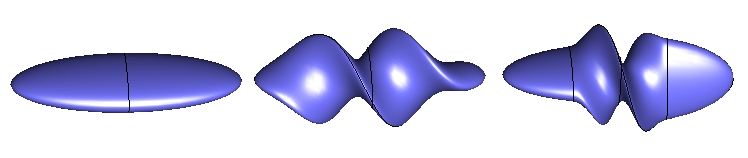
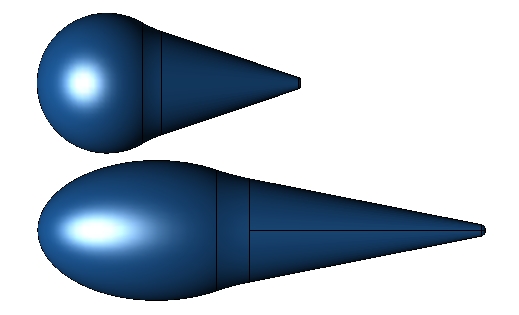
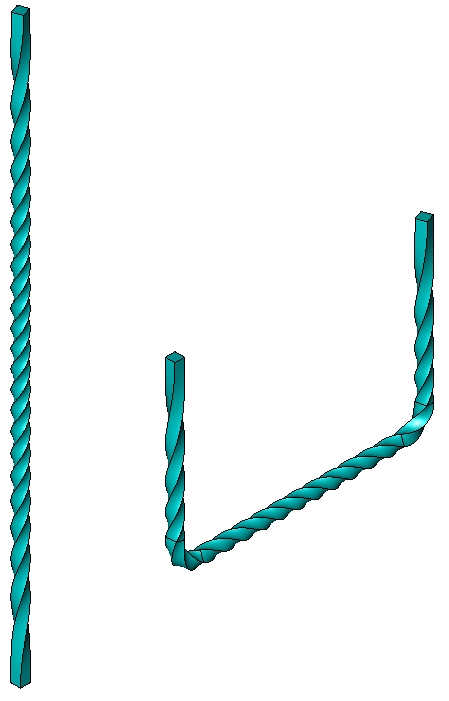
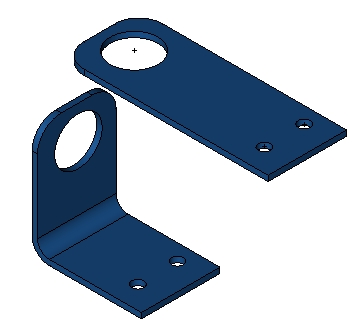
Warping is the ability to map a 3D shape to another 3D shape by a law. A law is simply an equation that maps an xyz position to another xyz position. Warping typically can be defined locally (within a region) or globally (entire body). Example warping operations within CSI-Concepts include bending, twisting, and stretching.
Twist
Twist a region of a curve, surface or solid about an axis through an angle. Stretch
Stretch a curve, surface, or solid along an axis by a translation vector. Bend Axis
Bend a body about an axis specifying a radius and angle. Bend Along Curve
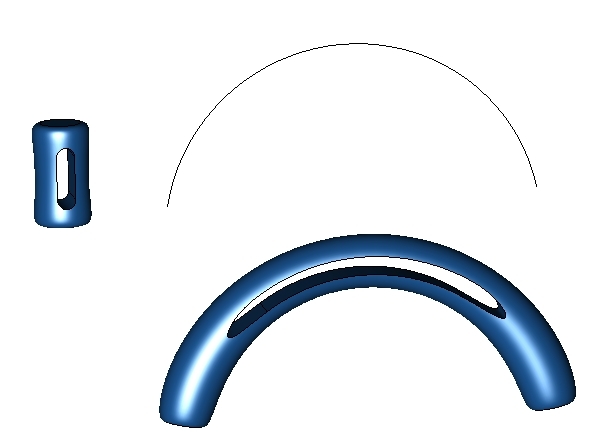
Flows a body along a curve by mapping the body centerline to the curve path. Very unique! Non Uniform Scale
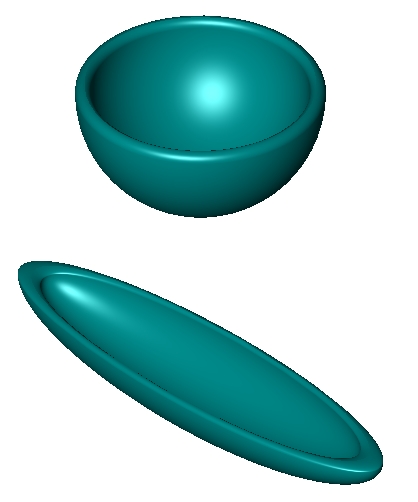
Scales a body using different values for x, y, and z. Import Warp Law
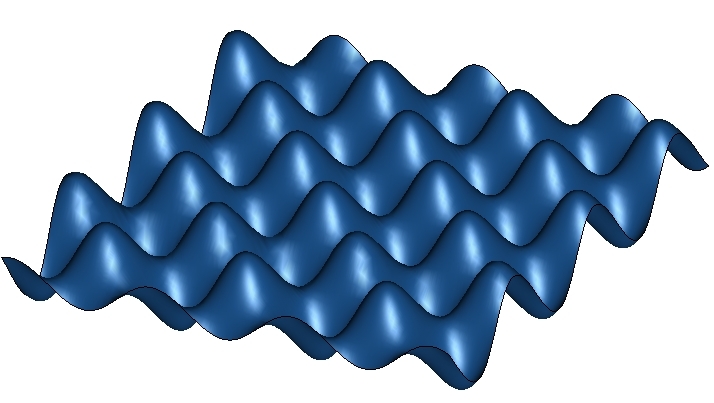
Import a warp law from a file. Laws are equations the define a 3D shape. The example below creates an egg carton like surface using sin and cos functions to define the 3D shape. vec(u,-30+v,2sin(u)*cos(v))
One key component when testing warping technologies is to ensure that the resulting warped body preserves the necessary modeling tolerances at shared edges, especially when dealing with trimmed surfaces. II. Local Operations
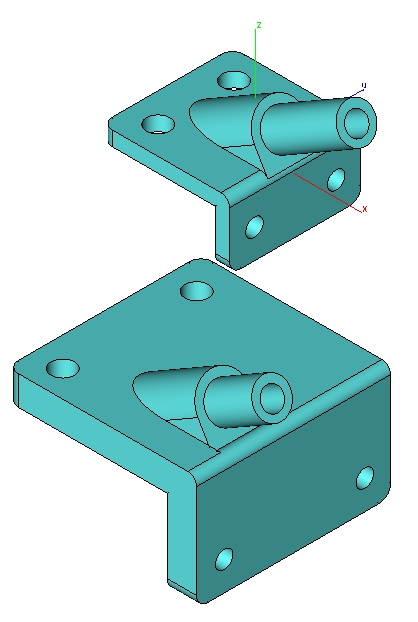
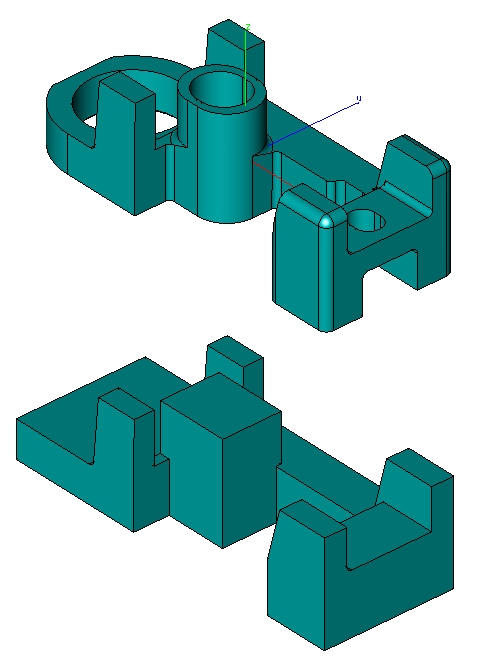
Local Operations provide a way to locally manipulate the geometry of a face or set of faces in a prescribed way without changing the topology of the solid model. Local Operations are non traditional because they allow existing models to be manipulated without the use of boolean operations or features. This method of modeling is especially suitable for modifying imported data which lack design history information. The integrity of the model’s topology and geometry remains intact as faces are relocated or adjusted. There are seven types of local operations supported by CSI-Concepts:
Move
Translate a collection of faces extending or relimiting neighboring faces. Offset
Calculate a new set of faces by offsetting the old face by a given distance.
Match
Transform a collection of faces to match the orientation and plane of a referenced face.
Replace
Replace a face with a surface.
Remove
Delete a face and automatically close the resulting gap by extending and relimiting neighboring faces.
Taper/Draft
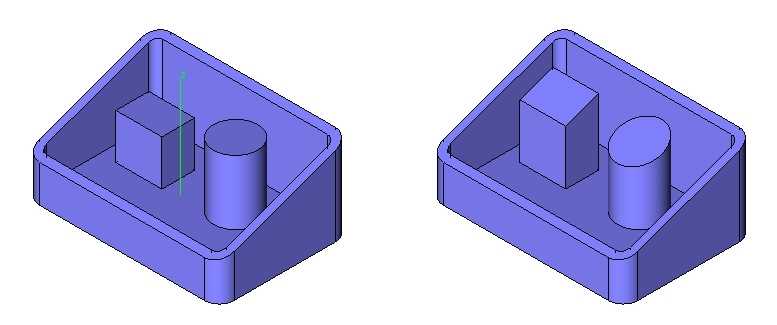
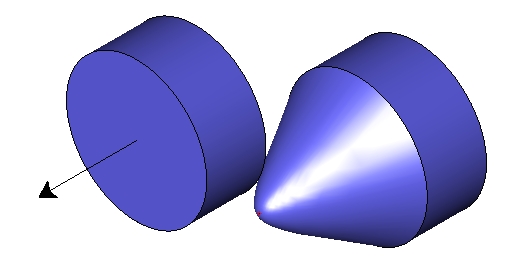
Rotate a collection of faces about a neutral position. Tapers are primarily used for modifying dies or molds to allow a piece to be removed easily, but are also of use in general modeling
III. Deformations
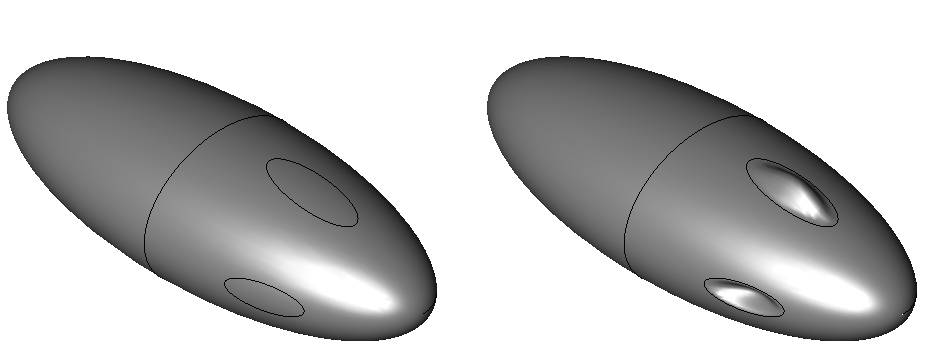
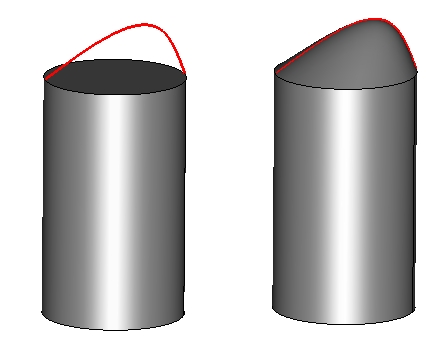
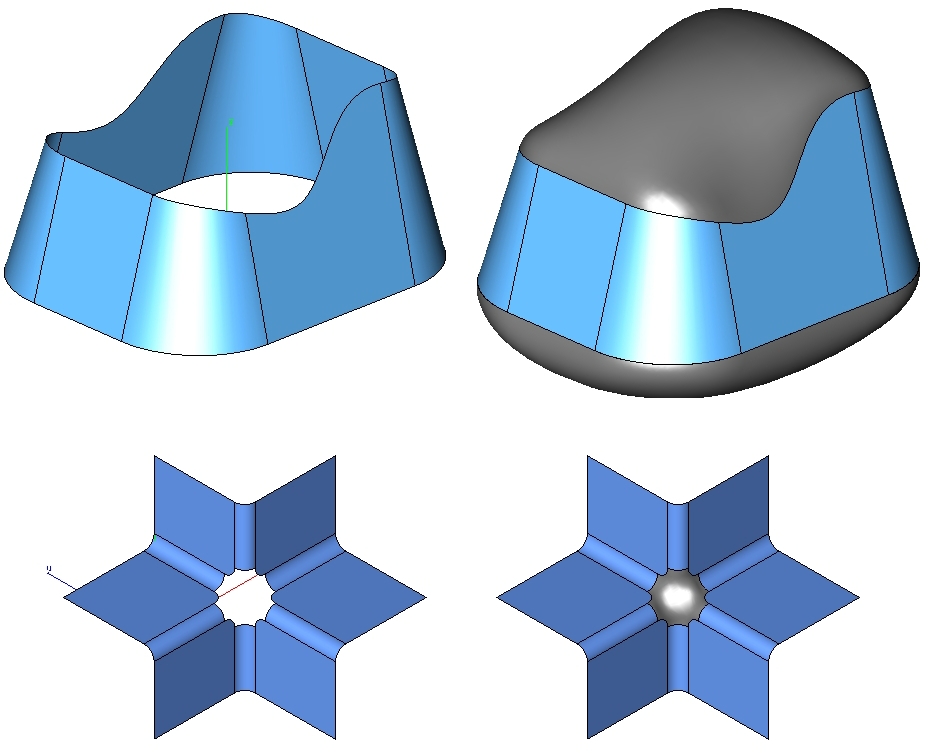
Deformable modeling is a method that locally or globally modifies a body using the idea of loads and constraints. A face or collection of faces are changed according to a load but restricted by optional constraints. An example load is a pressure and an example constraint is a continuity constraint.
Deformable modeling uses a simulation of an elastic surface that mimics real-world behavior to change the shape being designed. The resulting free-form surfaces are fair and easy to manipulate. Deformable modeling uses an energy based optimization strategy which minimizes the energy stored due to bending and stretching, so the shape that a deformable surface adopts is the one shape out of all possible shapes that minimizes the internal energy of the surface. This algorithm automatically produces very fair shapes similar to those seen in the billowing of a sail or the clean line of a bending beam.
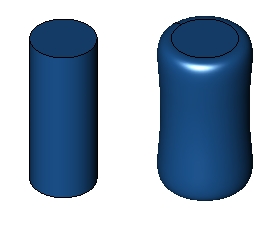
Example deformation tools in CSI-Concepts are: Deform by Pressure
Modify a face by applying a smooth pressure distribution.
Deform To Location
Deform a face to pass through a specified location.
Deform To Point/Curve
Deform a face to pass through a curves or point entity.
Continuity Matching
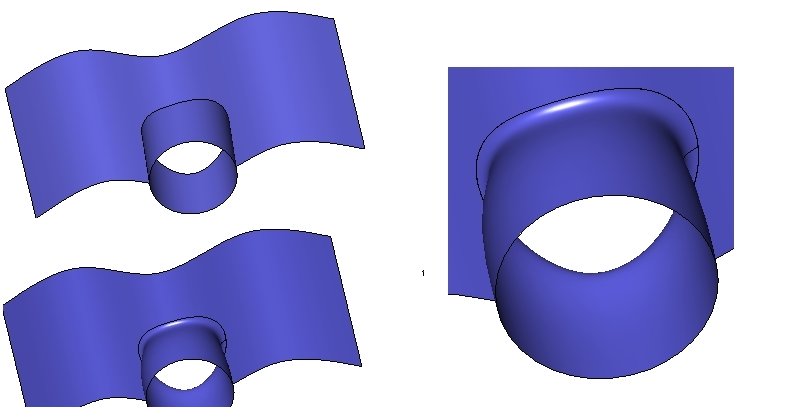
You can apply a deformation without loads and just use constraints. This provides the underlying technology for G1 and G2 matching and covering of edges and faces, including trimmed surfaces.
4. Extreme Modeling and the Conceptual Design Process
Conceptual designers have different requirements then downstream design segments. They need fast, flexible and intuitive design tools that help them convert their ideas into precise 3D models. Traditional modeling tools limit the designers creative process to lengths, angles, and parameters. Extreme modeling tools such as warping, deforming, and local operations allow the designer to think "outside the box" and create shapes beyond "machined" looking shapes created from extruded, lathed, or swept operations.
5. QuickTime Examples From CSi-Concepts
--Bending --Twisting --Stretch --Deformation with Continuity Constraint 6. What Next
Extreme modeling is an emerging technology for precision modeling content. Large potential exists especially with respect to push/pull user interfaces that expose the full capability. CSI strongly believes these technologies are the basis of next generation modeling methods and is commited to exploring user interfaces that will further enhance the productivity and creative gains from this exciting technology.

|